29th January 2020
The small community of Alter do Chão lies on the banks of the River Tapajós, around twenty miles upstream of Santarém. Until the 18th century, the village was inhabited mostly by the Borari people, who lived primarily by fishing. Today, its 1,298 residents still rely on fishing but have also embraced handicrafts and tourism as part of their livelihood. The name Alter do Chão translates to ‘Altar of the Earth’, referring to the flat-topped hill that rises behind the island, said to resemble a church altar.

The Magellan arrived at 7 am on a beautifully sunny morning, with a brilliant blue sky scattered with small, fluffy white clouds. It promised to be another sweltering day. From the deck, we could see the small village settlement just a short tender ride away, fringed by stretches of pristine white beach, with colourful little boats bobbing and glinting offshore.
Once the tenders had been safely winched down to river level, unhooked, and prepared for passengers, the disembarkation began at 7.30 am. We chose not to join the early lemmings, instead opting for a leisurely breakfast before making our way to the queue. However, it seemed most passengers had preferred an extra hour in bed after the clocks had gone forward overnight. By 9 am, we finally headed down to Deck 3 and boarded just the fourth tender of the morning.
Upon arrival at the tiny pier, much like in Boca da Valeria, we swiftly negotiated with one of the speedboat drivers moored on the adjacent beach. We agreed on a price for a trip to Lago Verde, a picturesque lagoon said to shift from blue to green throughout the day, as well as to the beach described by The Guardian as “the most beautiful freshwater beach in the world,” often likened to the Brazilian Caribbean.

Somewhat worryingly, after being issued with life jackets, we sped off into the small bay, rapidly passing the so-called “most beautiful freshwater beach in the world” before turning into a large lagoon that, disappointingly, showed little sign of changing colour, certainly not to green.
Skirting the shoreline, we eventually eased off the power and entered a mystical world of submerged trees. Our guide referred to it as the “Magical Forest,” and I had to agree; it was an apt description. As we ventured deeper into this strange, almost surreal landscape, we came across a narrow passage of clear water, winding past a handful of fishermen’s huts. They appeared unoccupied, though it was likely their occupants were sleeping; most fishermen on the Amazon, we had learned, prefer to work at night by the glow of their lamps.

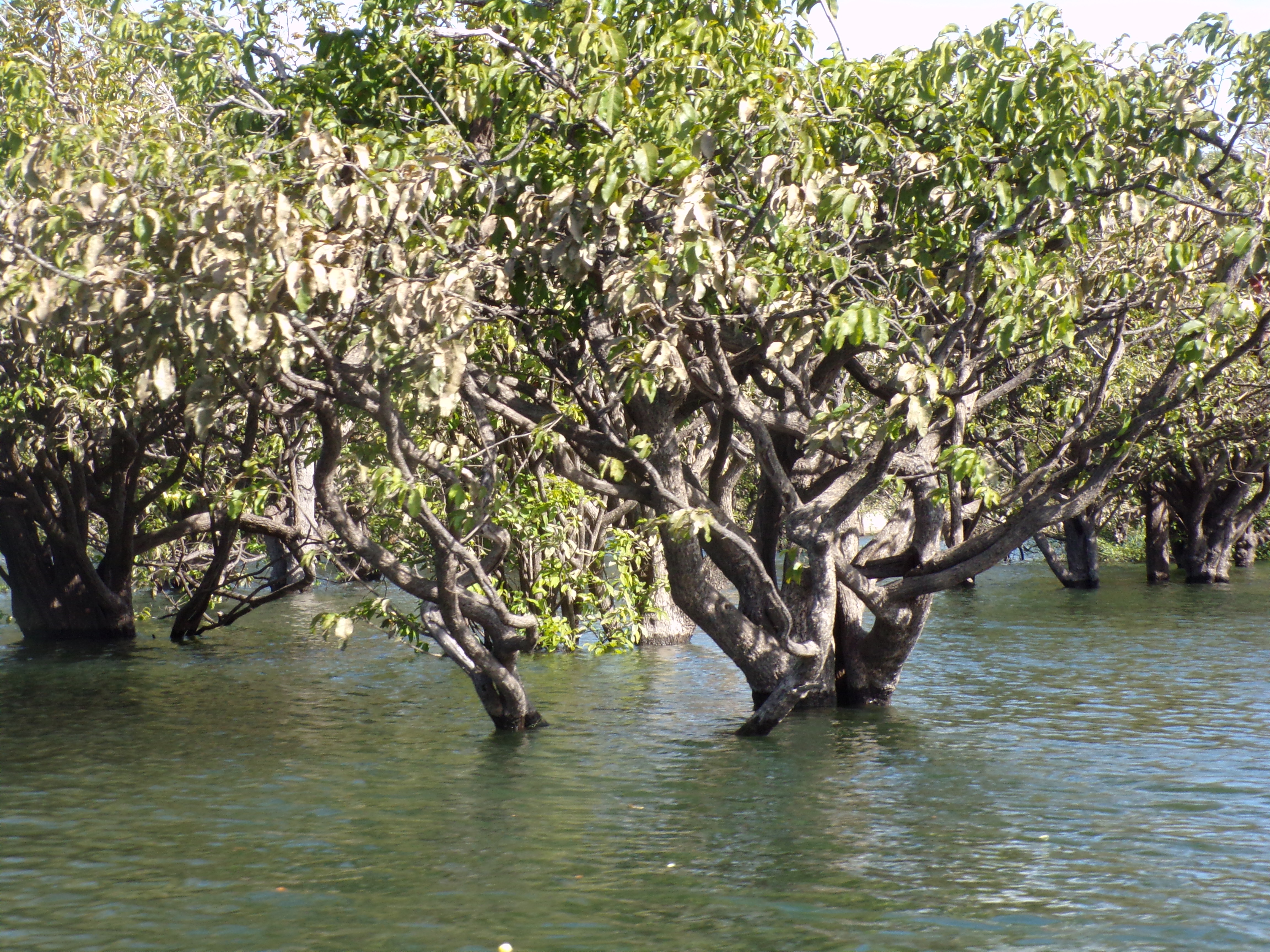
 We saw birds of all sizes and colours, as well as a tortoise perched on a floating log, or so our guide claimed. I suspected it was more likely a turtle. Overhead, we could hear monkeys chattering in the tree canopy that projected from the water.
With the engine cut, we drifted to a stop. The silence, like our surroundings, was deeply unsettling. Were they monkeys? Or the ghosts of monkeys? And where were the enormous anacondas our guide had assured us lived here? The water was thick with submerged and twisted branches, giving more than a convincing illusion of something poised to strike. I was relieved when the motor sputtered back to life, and we resumed our weaving course between tree trunks and tangled knots of roots.
Eventually, we broke free from this eerie, almost fairy-tale-like world and re-entered the lagoon. It remained stubbornly unchanged in colour. Skimming across the water, we arced into another lagoon, once again following the bank’s edge, spotting more vividly coloured birds flitting through the vegetation. Our guide rattled off their names effortlessly, none of which we could hope to pronounce.


We eventually emerged from the forest, cutting back across the lagoons before re-entering the bay. With the motor at full throttle, we sped towards the so-called ‘most beautiful freshwater beach in the world’. Slowing down, we turned towards the shoreline, beaching the prow of our craft on its dazzlingly white sand.
We paused here for only ten minutes or so, though I suspect our driver and guide would have preferred a longer stop. Unfortunately for them, their latest clients had no interest in sunbathing, and after their earlier warnings about needlefish, swimming was entirely out of the question. Our guide’s unsettling tale about his unfortunate brother, who, only last week, had been rushed to the hospital for surgery after a needlefish wriggled into his penis, had put an abrupt end to any notion of taking a dip.
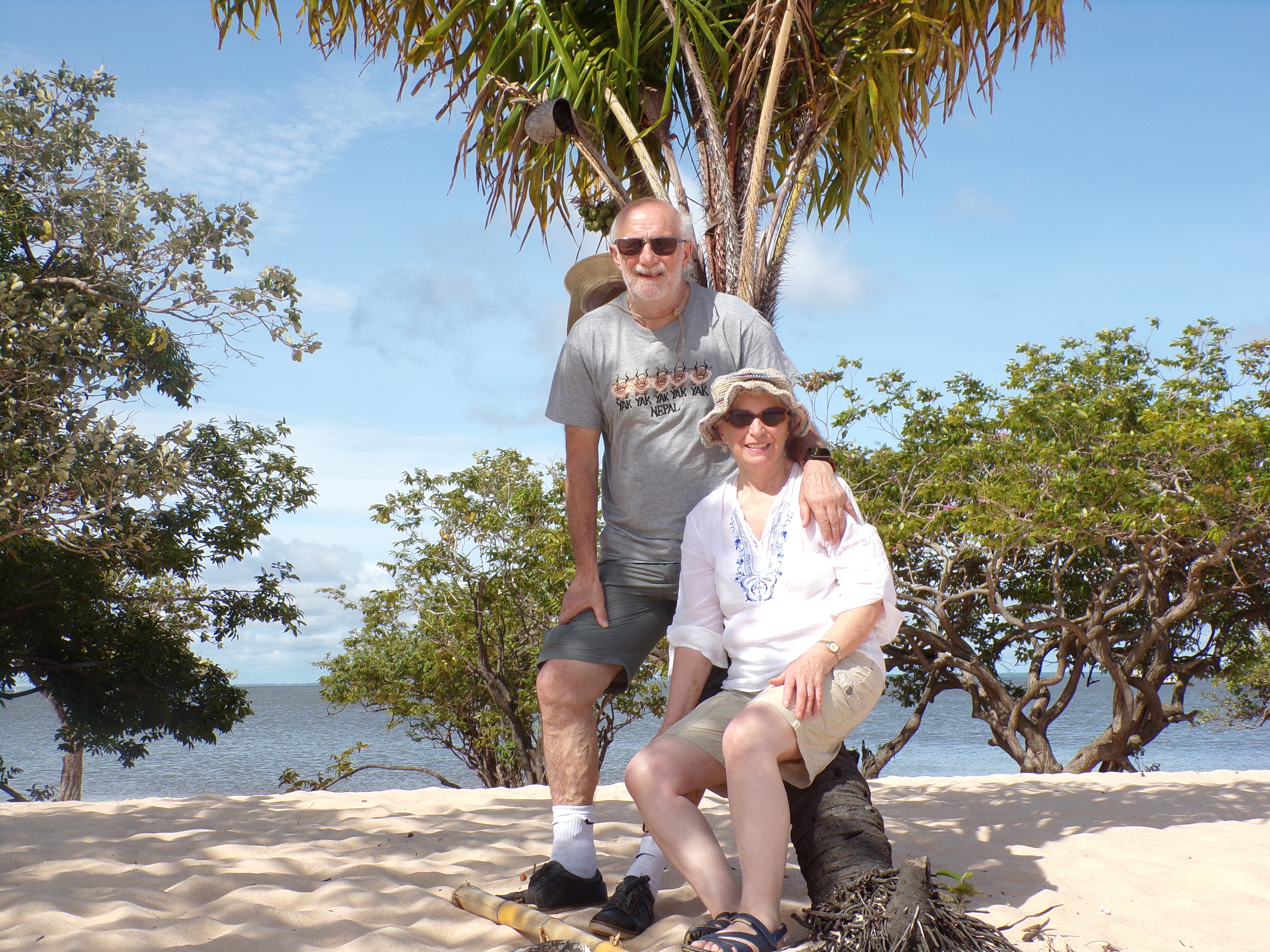
Instead, we contented ourselves with photographs and a critical assessment of whether The Guardian’s description was justified. Compared to many saltwater beaches we’ve been fortunate enough to visit, it didn’t quite measure up to the best. However, it certainly had its merits. The sand was white and soft, shade was plentiful from both trees and man-made structures, and there were ample opportunities to sample cold drinks and local food. Water sports were available, and the surrounding scenery was both unique and picturesque. In conclusion, while it may not rival the world’s finest saltwater beaches, The Guardian was likely correct in calling it one of the best freshwater beaches with sandy shores.
We completed our speedboat ride back to the small pier, paid the guide, and set off to explore the village. By now, many more cruisers had arrived, most of whom seemed to be browsing the dozen or so trinket stalls conveniently arranged around the toilet block next to the pier, an interesting choice of location for a marketplace!
The village centre was only a ten-minute stroll away, but after the refreshing breeze of the speedboat ride, the heat radiating from the sun-scorched tarmac and concrete quickly became oppressive. I was already sweating profusely long before we found the welcome shade of a tree and a conveniently placed bench.
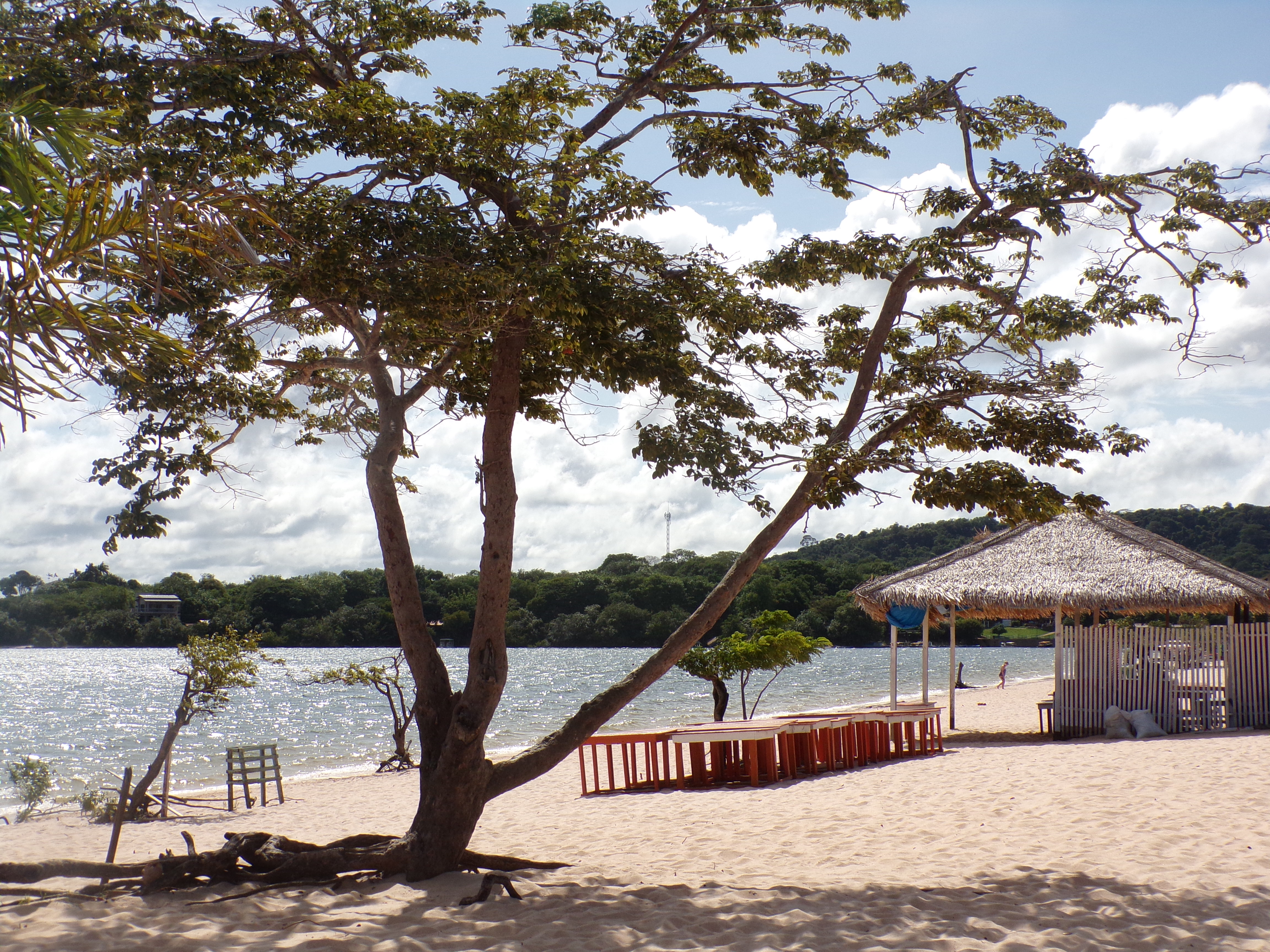
After a brief circuit of the shops, we took the steps down to the beach promenade and found another shaded bench. From there, we had a perfect view of the so-called ‘most beautiful freshwater beach in the world’. What had I been thinking? From this vantage point, it was clear, the title was entirely justified. It turned out to be a matter of perspective! From the village, the strip of heavenly white sand was accessible only by small blue and white rowing boats, which were plentiful and offered return trips for $5. Many from the Magellan were already making the short five-minute crossing, eager to experience the beach from up close.

Cooled and somewhat refreshed, we continued along the concrete promenade until it gave way to a wooden walkway, which soon narrowed into a scrubby little path winding beneath the trees. Our progress was eventually halted by a tangle of mangroves, forcing us to retrace our steps.
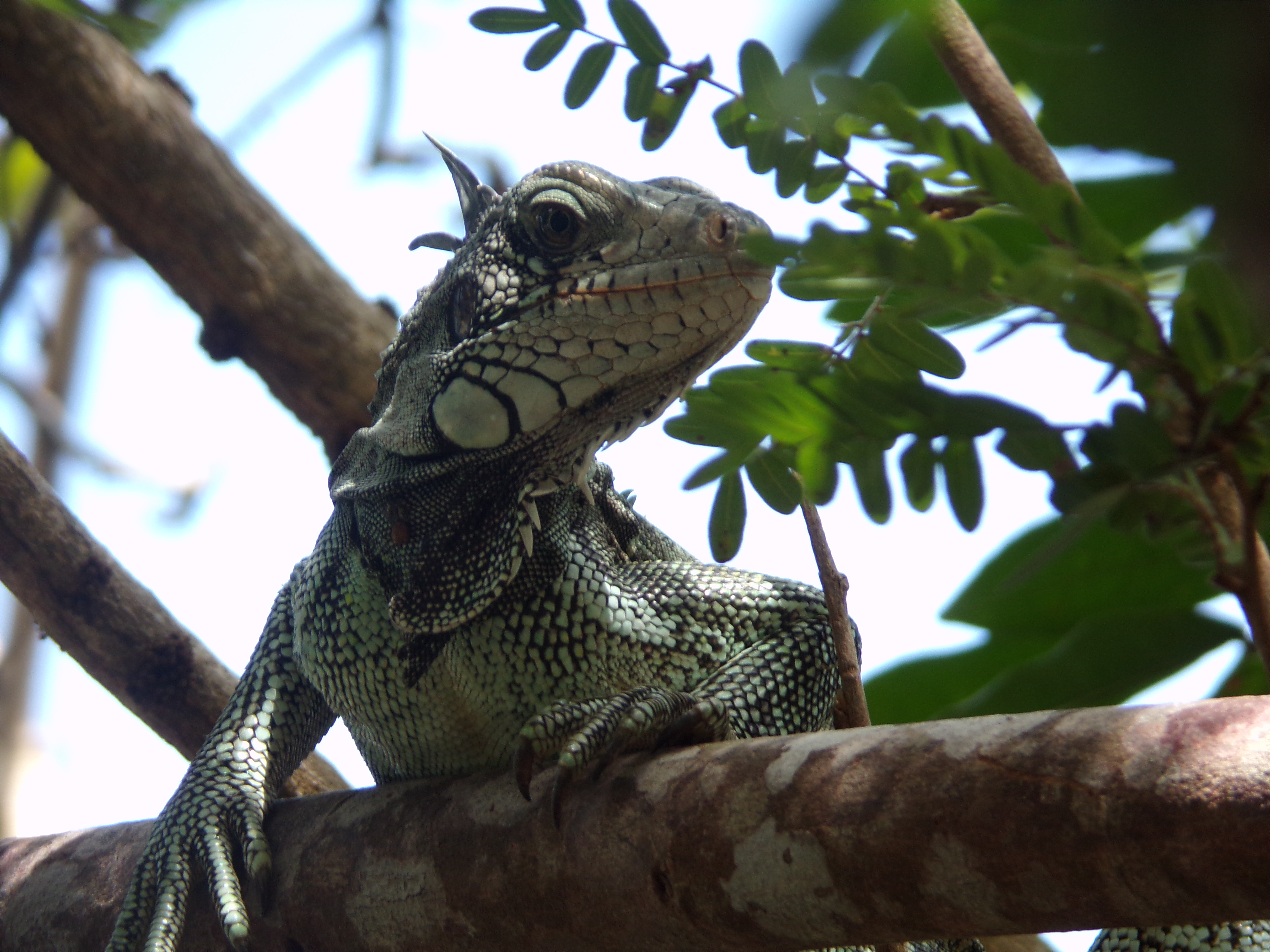
We then followed the now blisteringly hot beach back towards the pier, pausing along the way to photograph a couple of iguanas and some striking yellow-breasted birds.
We were hot, sweating, and nearing exhaustion, desperate for cold drinks and the relief of air conditioning. Without hesitation, we caught the next tender boat back to the ship.

Iced drinks quaffed, a cold shower endured, and more calories consumed in preparation for the afternoon’s excursion, we headed back to Alter do Chão. Once again, we found ourselves in the village square, where Sue resumed her quest for ‘something or other’ in the shops while I sought the sanctuary of a shady tree and a well-placed bench.
As before, we meandered along the concrete beach walkway, taking every opportunity to pause, rest, and chat with fellow passengers. Conversations inevitably turned to the day’s sightings, with a friendly competition over who had photographed the most exotic species. No one, however, could top my prize-winning shot, a domestic cat perched high in a tree which, with a bit of imagination (and perhaps a squint), could most definitely pass for a puma!

Eventually arriving back at the toilet block stalls, Sue began negotiations for a small parrot statue. To her surprise, earlier that morning, she had recognised the stall holder as being the one that she 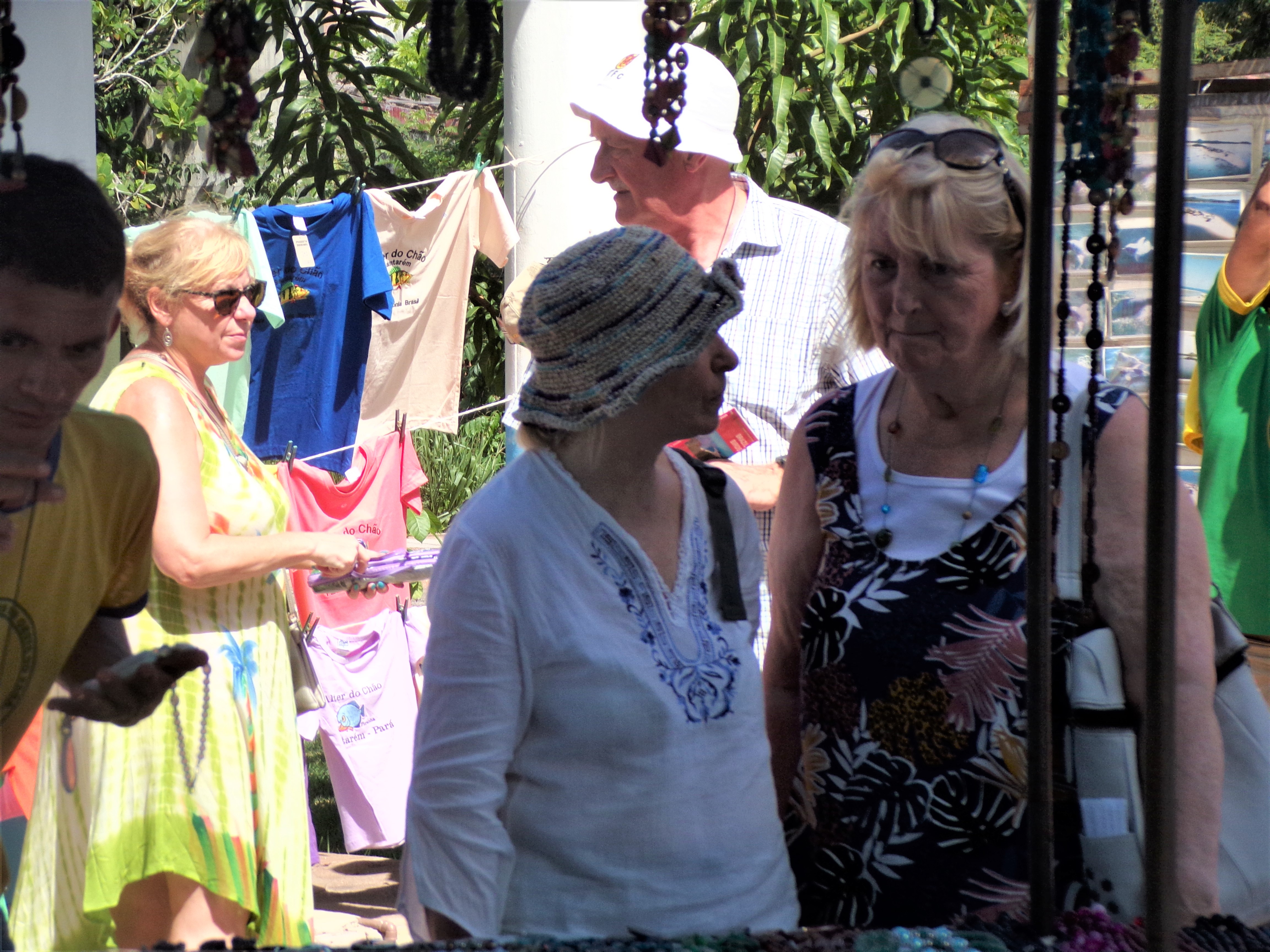 had bought the piranhas from in Santarem; he had wanted too much for the bird at $75 (I had only given her $20).
On our first return to the ship, she had tried again, and he had relented to $60. Her next attempt after lunch brought it down further to $40, and at last, just as we were about to leave the village for the final time, she claimed victory, and he admitted defeat.
At 7 pm, the ship raised anchor and began its journey downstream. Now, two leisurely river days aboard awaited us.
 Palmer Family
Leave a comment